by rossanahead | Apr 4, 2011 | family, Karen Galarpe, parenting, woman
By Karen Galarpe
The security guard peeked into my little red checkered tote bag before allowing me entry into the bank early Wednesday morning last week. He must have been amused because he said, “Thank you, ma’m” in a cheerful tone.
Inside my bag, you see, was a Zip Loc plastic bag full of P5 and P10 coins. Total weight: maybe 5 pounds. Total count: over P1,000.
It was my mom’s gift to my son. For quite some time, my mom would drop P5 and P10 in two piggybanks. They became full recently, and so she gave them to my son. It was my son who decided to deposit all of the coins in his account at the bank, which was what he did too when he got some cash as gift last Christmas.
I can’t remember how old he was when I first opened a bank account for him. Definitely it was before he started grade school, though. And so over the years, whenever he would receive cash from godparents and family members, these would go straight to the bank.
When my two friends got married more than a decade ago, I was floored when I learned they bought a house using their own money as downpayment. They were just in their 20s then. It turns out both of them grew up with their parents saving for them in the bank all the money gifts they received since they were small. So in some 20 years, compound interest has made their savings grow so much that these were enough to help them start on their own two feet when they got married.
The habit of saving can be instilled in a child early. Aside from opening a bank account for him, let him see you and the people around you practice saving as well. Start today and keep at it until it becomes second nature to your child.
by rossanahead | Apr 1, 2011 | children, Gina Abuyuan, parenting, woman
By Gina Abuyuan
In my most recent post, I listed down qualities or “practices” that solo parents may be doing to be raising pretty well-rounded and well-grounded children. Aside from showing them—inadvertently or advertently—a more “real” view of the world, and teaching them to be more responsible and understanding, solo parents somehow also produce more conscientious children. Whether this is a reaction rooted in guilt (since the child sees the parent having to exert double the effort in everything), I don’t know. I’m no psychologist, so this can all be attributed to observation.
One of the areas I see this trait in is money and material possessions. Even with the world at his feet and everyone around him eager to make up for his lack of a mother via gifts or cash, J, my partner’s son, shrugs it off. I’ve heard him say more than once, “I have enough.” Sometimes we even have to force him to think of things for us to buy him when we go abroad or even to the supermarket. Once, when I brought him an assortment of potato chips, he asked me whom they were for. His reason? He didn’t ask for them, so they must be for somebody else.
I still have yet to encounter a problem with him going overboard his budget. Since he’s already in college, his allowance is substantially higher than his half sisters (on his mom’s side), and his would-be stepsister and brother (on his dad’s side, through me). That’s not to say he scrimps, but it’s apparent he’s a smarter spender and saver than most 20-year-olds with their own car and access to a bank account.
I see the same cautiousness about finances in my daughter. It’s not that she doesn’t want anything, but saving up and spending for something she lusts after is second nature to her. Three years ago, at 10 years old, she saved her Christmas money to buy a Mac optical mouse worth P3,000. The year after that, she bought her own Skullcandy earphones. This year, after selling her first wave of silicone ballers (and paying what she owed me in full the very moment she could), she bought her own DS, and treated herself to a few pieces at Forever 21. (It made me think—what was I doing when I was 13? Lying in my bed daydreaming about Duran Duran, that’s what.)
So what did my partner and I do—aside from triggering in them a certain sense of responsibility due to our situation—that made them more careful about money than normal? Here’s what I think:
* We encouraged piggy banks or money jars at an early age. I prefer a transparent jar so kids can see how much is being saved. Let them lift the jar from time to time to see how heavy it’s getting. Take a few coins out to buy some candy to show them the concrete relation between money and a product. (I haven’t opened bank accounts for my kids yet, but my partner has. Maybe I should soon.)
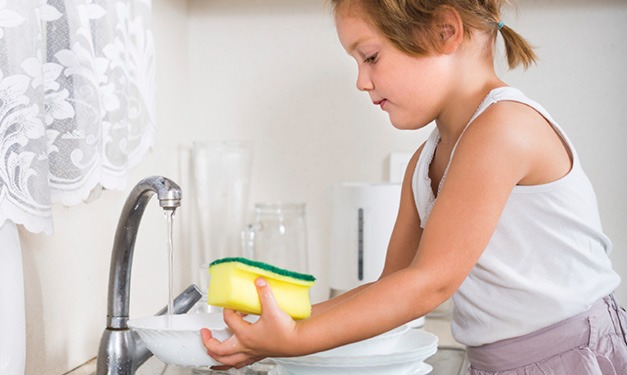
* Make them earn it. I didn’t do the “do your chores” bit, since I believe kids should pitch in without getting paid; besides, with what my daughter earns with her ballers, you think she’d even want to wash the dishes for P50? Nah. When my daughter said, “I want to earn money,” I asked her to figure out what she was good at, and make money from that. She’s quite adept at graphic design, so boom. Ballers. Next up: bags and shirts.
* I keep my kids’ money gifts, but when we go out and they see something they like, I remind them about the amount that’s with me. I ask them to think twice about whether they want to blow all of it on that certain product, or if they can live without it, or if they’d like to look around more. It discourages impulse buying.
* We’re careful about our own attitudes about money, and how they might influence the kids. We’re generous when we can, we’re honest about tightening the belt straps if need be. Eating in Mang Larry’s in U.P. doesn’t mean we can’t have as a good time if we eat in Burgoo’s. We don’t like swiping the card, and my partner has illustrated to my daughter and to his son the horrors and problems of people mired in debt. We never say “money is the root of all evil,” because money can be good—it just depends on how you use it. I’m particularly sensitive about the phrase “wala akong pera” because that creates waves of energy that will make it a self-fulfilling prophecy, so I call my daughter’s and partner’s attention whenever I hear that. We also like to point out stuff in the news—the AFP scandal, for instance—and use them as opportunities to remind them that stolen money or ill-gotten wealth means you’ve deprived other people of their due, and it’s likely to come back and bite you nastily in the ass.
by rossanahead | Mar 29, 2011 | children, Lyra Pore, parenting, woman
By Lyra Pore
Getting my kids to clean their bedrooms has been a hit-and-and miss affair in our household. I’ve tried giving direct orders: “Clean your room.” It doesn’t work. I’ve tried praising the merits of tidiness: “Isn’t it awesome?” It doesn’t work. After several years of experimentation, I’ve found two things that do work.
I’ve only written the first paragraph of this blog when I had to leave the computer to get the table ready for breakfast. I come back after a while to find this list typed into my draft:
- Give them chocolate.
- Pay them lots of money.
- Give eldest daughter a unicorn.
- Give eldest daughter books.
- Take eldest daughter to Harry Potter theme park.
- Give eldest daughter an iPad.
Nice try, eldest daughter, but these are the tricks that actually do the job:
TRICK NO. 1: Grab a large garbage bag and announce to the children: “I’m going to clean your rooms. Everything I pick up on the floor will go into this bag and get chucked in the bin.”
It doesn’t matter whatever’s keeping them busy at the moment. Selena Gomez could very well be doing the most amazing thing on Wizards of Waverly Place, but they drop everything at the sight of the black garbage bag and run to their rooms as fast they can. They know our ever-reliable garbage collector never misses his weekly run.
TRICK NO. 2: Invite their friends to come to the house.
Two weeks ago, one of their classmates rang around 11:00 in the morning.
“Can I come over to play?”
“What time?”
“11:30?”
“Mom, is that OK?”
“Yes. But make sure you tidy up. You know I don’t like showing other people our mess.”
As soon as she hangs up the phone, she and her sister run around the house picking up toys and other litter. In less than half an hour, they have the house–not just their bedrooms–looking sparkling clean.
Ha! You bet I’ve been on the phone today organizing play dates with other moms.
“Hi! I was wondering if I could invite your little girl to come play at our house this weekend.”
“Thank you! That’s wonderful. She’d love to come.”
Featured Photo Courtesy of Metro Parent

by rossanahead | Mar 28, 2011 | children, Education, parenting, woman
By Bubbles Salvador
The terrible twos can be, well, terrible. This I know because my son, only almost two, is worlds away from that cute little baby who always did as Mommy or Daddy said.
It’s not that he’s out of control – he’s just too much to handle sometimes.
Luis behaves very well in church, and is able to sit through the entire mass. At night, we say our prayers together, which he ends with a sweet “Good night, God!” He even surprises me with an affectionate hug every now and then.
But there are also times when the terrible twos hits like the plague. When he refuses to share a toy or greet an elder (we insist on the age-old tradition of pagmamano), it could result into a riot: Mommy is screaming, Daddy is demanding obedience, Luis starts whining.
“It’s a phase,” my Mama said. Should I believe her? She instilled enough fear in me and my siblings to make sure that none of us even thought of misbehaving like that. What did she know about terrible twos?
“Just keep telling him that what he’s doing is wrong. It’ll take a while but he’ll get it. Luis is smart,” she told me.
Maybe Mama’s right after all. “Smart” may be the key word. At times, even before we send him to the corner for a timeout, Luis would go there himself and say, “Stay…corner. Mommy’s mad.”
It is exactly this smartness that we are counting on so we can finally get past this stage. He can recite the rules anytime: “No hitting. No throwing toys. Good boy lang.” I think we’re getting there.
I guess part of being a parent is hitting these highs and lows; we just try to make the most out of the highs. Just as we need to encourage our kids’ positive behaviour, we also need to give ourselves a pat on the back for trying (and just keep our fingers crossed that things turn out OK!).
Photo by MI PHAM on Unsplash

by rossanahead | Mar 27, 2011 | Jing Lejano, parenting, woman
By Jing Lejano
The other week, I had dinner at my friend Janice’s house. I’ve known Janice and her husband Gary for years. And I’ve always looked up at them as an ideal couple. They not only love each other to bits, they also work very well together.
Janice and I were at the living area talking when Gary said an inviting “Kain na.” When nobody seemed to pay him any attention, he barked a more commanding “Kain na!” And, as if on reflex, I stood up straight and realized that there was a man in the house. It was kind of disconcerting.
I’ve been a single parent for years and years now. There is no man in my house. I’m the boss of the house. I spend time with my kids and take care of them when they get sick. I pay the bills and run the household. If something needs to be done–paint the walls, change the light bulb, tile the bathroom floor, whatever–I do it. If I can’t do it, I pay someone else to do it for me.
I admit that it’s not the most ideal of situations but I make the best of it because I have to. I just have to.
Sometimes, I feel guilty about the whole thing. When they were younger, I noticed how my boys got so easily attached to my sisters’ boyfriends. I knew they were just hungry for a father figure, and unfortunately, that’s something I couldn’t order online.
But when I see my boys today, taking care of their niece Sophie, going out with their barkada, laughing at reruns of How I Met Your Mother, washing the dishes no matter how reluctantly, and occasionally, fighting over the computer, I tell myself, “We’re doing fine.”
Photo by Aswin on Unsplash